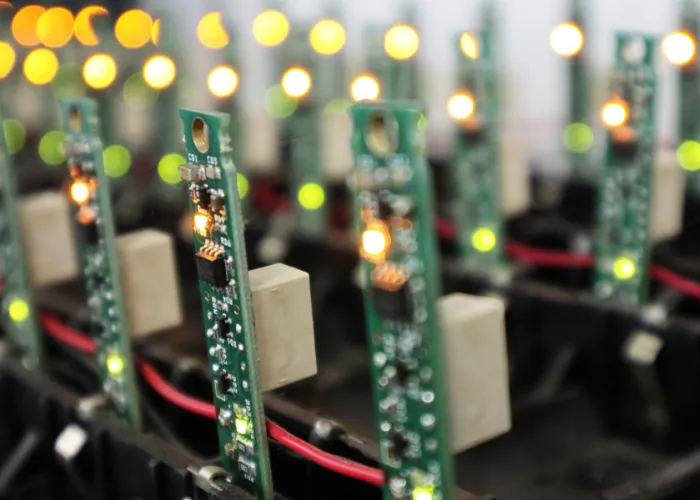
| CLIENT & APPLICATION A technology company developing a connected industrial IoT device incorporating sensors, communications electronics and low-power processing. The product was still in engineering validation, so successive PCB revisions were required before the design could move into routine manufacture. |
The Real-World Challenge
The customer needed small quantities of physical boards quickly enough to test each revision, but prototype speed could not come at the expense of assembly consistency. BOM changes, PCB revisions and component substitutions also had to remain controlled so engineers knew exactly which hardware version they were testing. Just as importantly, the prototype process needed to resemble the intended production process so the customer did not face a second manufacturing learning curve when the product moved into pilot manufacture.
How Contract Production Approached It
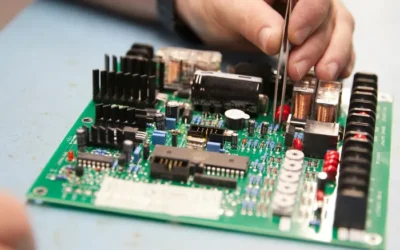
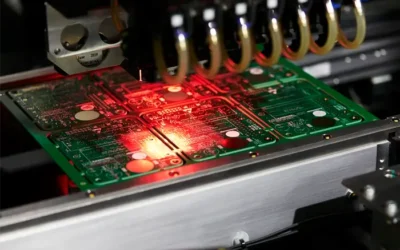
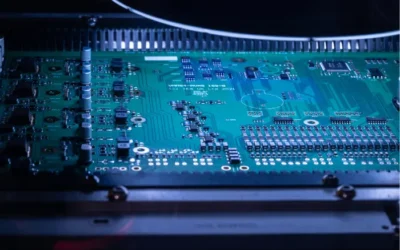
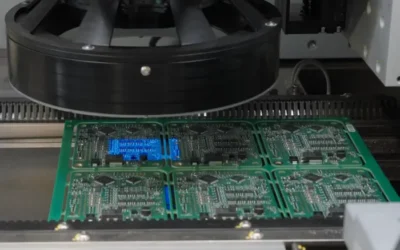
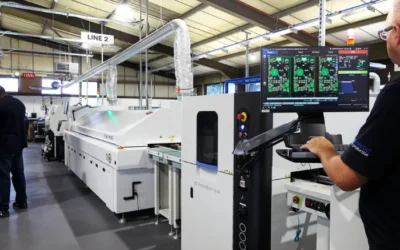
CPL used production-capable processes for the prototype builds rather than relying solely on hand assembly. Automated stencil printing, Panasonic AM100 SMT placement, 8-zone reflow and Nordson SQ3000 3D AOI provided a repeatable route for each iteration. Revised manufacturing information could be incorporated into subsequent builds, allowing the customer to validate changes before progressing to a pilot production batch.
Why This Approach Matters
Using the same core manufacturing technologies during prototyping and later production reduces the risk of discovering that a design which worked as a hand-built prototype behaves differently when transferred to automated manufacture
Practical Outcome
- Small machine-built batches suitable for engineering validation
- Clearer control of successive hardware revisions
- Prototype assemblies representative of the intended production process
- A more direct transition into low- and medium-volume manufacture
| CAPABILITIES USED • PCB prototyping • Automated stencil printing • Panasonic AM100 SMT • 8-zone reflow • 3D AOI • Component procurement • Functional verification |